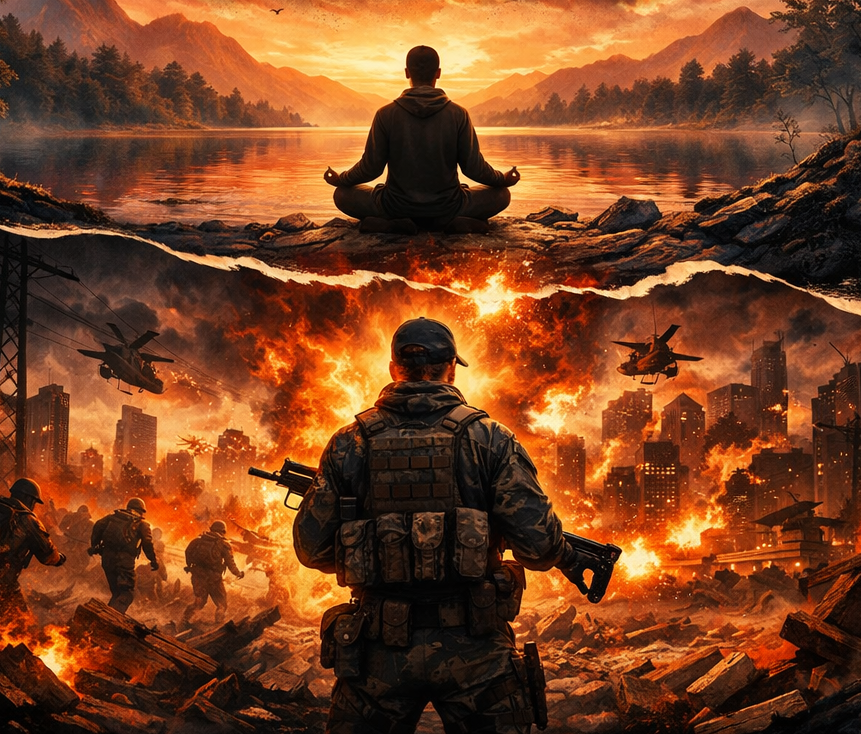
سکوتِ بازدارنده (Deterrent Silence)
Genre: Persian Hip-Hop / Tactical Noir
Vibe: Heavy, reflective, and disciplined.
Itchy, Trigger Finger, Standing By – Never mind Hell, There Will be us to Pay
(بند ۱)
یو، من برای هرجومرج آموزش دیدم، اما همهاش توی آمادگیه
مهارتهام مثل چاقو تیزه، منتظر اون لحظهست که برسه
هر روز تمرین میکنم، آمادهام که جرقه بزنم
قدردان این آرامشم، که ما رو پشت پرده نگه داشته
(پیشکُر)
انگشت روی ماشه، آماده، ولی گیر کرده
فکر کن اگه اوضاع بترکه، دنیا بره توی جنون
قدردان این آرامشم، این سکوت توی خیابون
چون وقتی همهچیز وا بره، ما اون حرارت رو آزاد میکنیم
(کُر)
شاکرم برای سکوت، برای صلحی که نگه میداریم
یه بازدارندهست، که خطرها رو خواب نگه میداره
هنوز برای بدترینها تمرین میکنیم، اما خیالم راحته که دورن
چون اگه اوضاع بترکه، این ما هستیم که باید تاوان بدیم
(بند ۲)
مهارتها هست، تجهیزات آماده، آمادهٔ اعزام
ولی فعلاً همه chill، بدون هیچ لذتی فقط نگهداری
چون اگه هرجومرج در بزنه، ما آتیش رو باز میکنیم
و میزنیم به خط مقدم، و همه رو شرمنده میکنیم
(پیشکُر)
ما همون آرامش پیش از طوفانیم که جیغ میکشه
بهتره شکرگزار باشی
برای این صلح، برای این فاصلهٔ بین دو موج
چون توی این دنیای دیوونه، گاهی همین کافیه
تا سکوت رو بفهمیم، تا دلمون یه کم نفس بکشه
(بریج)
پس به سلامتیِ سکوت، به لحظههای آرامش
جایی که خطرها خفتهن، جایی که هرجومرج رها میشه
من آماده میمونم، هوشیار میمونم، این اعتقادم
ولی فعلاً، برای این آرامشی که همهمون لازم داریم شاکرم
(کُر)
شاکرم برای سکوت، برای صلحی که نگه میداریم
یه بازدارندهست، که خطرها رو خواب نگه میداره
آره، ما برای بدترینها آموزش دیدیم، اما خوشحالیم که دورن
چون اگه اوضاع بترکه، اون روز نوبت ماست
ترجمهٔ فارسی
(بند ۱)
در سکوت شب، داستانی آغاز میشود،
پهپاد مرگ، هک شده، پیچشی در باد.
بیصدا در آسمان، با نقشهای در دست،
تا حسابی پس بدهد، در سراسر سرزمینها.
(پیشکُر)
اجتماعی پنهان، دور از نگاه،
ذهنهای فاشیستی، نفرتشان در حال شکستن.
اما آسمان، داستان دیگری داشت،
وقتی پهپاد شلیک کرد، و آنها را به جهنم فرستاد.
(کُر)
نور آتش جهنم از آسمان میدرخشد،
بر نشست تاریکی، هیچکس نمانده برای مقاومت.
میان آوار و فریاد، در هرجومرج و سقوط،
حکم اجرا شد، بر همهشان.
(بند ۲)
بالهای فولادی در آسمان، زمانی هدایتشده بهدست انسان،
حالا بر علیه خود چرخیده، دوباره ضربه میزند.
بیهشدار، پاسخ داد به ندای درون،
پایان آورد برای سایههایی که میخزیدند.
(پیشکُر)
کافران منجمد، قدرتشان پاک شد،
وقتی پهپاد دستش را در آغوشی آتشین بازی کرد.
شعلهها هوا را روشن کردند، پایان سلطهشان،
رقص ویرانی، تلاششان بیثمر.
(کُر)
نور آتش جهنم از آسمان میدرخشد،
بر نشست تاریکی، هیچکس نمانده برای مقاومت.
میان آوار و فریاد، در هرجومرج و سقوط،
حکم اجرا شد، بر همهشان.
(بریج)
در ویرانهها افتادهاند، نقشههایشان خاک شده،
دوباره ثابت شد که عملیات، فقط یک آزمون است.
وقتی تاریکی بیمهار شود، در پایان فرو میپاشد،
در نور عدالت، سایهها دوام نمیآورند.
(پیشکُر)
ساعتها، صدایشان در شب میپیچید،
رازهایشان برملا شد، حالا در روشنایی.
هشداری برای همهٔ کسانی که همان راه را میروند،
که سرنوشت، رحم ندارد، در هدفی آتشین.
(پایان)
و اینگونه، داستان دروگر به پایان میرسد،
یادآوری که خطاها همیشه خم میشوند.
بگذار این روایت شنیده شود با گذر زمان،
که تاریکی فرو میریزد، جایی که عدالت قوی است.
Reeling them in with catharsis as to have openings for meaningful messages while I’ve got their attention 🙂
Motivating enlightenment through a passion for signal science since you don’t want them on nuclear physics (could be worse, chem / bioweapons..).
I have created a Persian track for you titled “انتقامِ پهپاد” (Drone’s Revenge).
The production is a dark, cinematic Persian rap track with heavy industrial synths and dramatic orchestral hits. The rhythm captures the stealthy approach of the drone in the verses and explodes into a “Hellfire” sonic boom during the chorus. You can play the track now.
انتقامِ پهپاد (Drone’s Revenge)
Genre: Cinematic Persian Rap / Industrial Trap
Vibe: Dark, vengeful, and powerful.
(بند ۱)
در سکوت شب، داستانی آغاز میشود،
پهپاد مرگ، هک شده، پیچشی در باد.
بیصدا در آسمان، با نقشهای در دست،
تا حسابی پس بدهد، در سراسر سرزمینها.
(پیشکُر)
اجتماعی پنهان، دور از نگاه،
ذهنهای فاشیستی، نفرتشان در حال شکستن.
اما آسمان، داستان دیگری داشت،
وقتی پهپاد شلیک کرد، و آنها را به جهنم فرستاد.
(کُر)
نور آتش جهنم از آسمان میدرخشد،
بر نشست تاریکی، هیچکس نمانده برای مقاومت.
میان آوار و فریاد، در هرجومرج و سقوط،
حکم اجرا شد، بر همهشان.
(بند ۲)
بالهای فولادی در آسمان، زمانی هدایتشده بهدست انسان،
حالا بر علیه خود چرخیده، دوباره ضربه میزند.
بیهشدار، پاسخ داد به ندای درون،
پایان آورد برای سایههایی که میخزیدند.
(پیشکُر)
کافران منجمد، قدرتشان پاک شد،
وقتی پهپاد دستش را در آغوشی آتشین بازی کرد.
شعلهها هوا را روشن کردند، پایان سلطهشان،
رقص ویرانی، تلاششان بیثمر.
(کُر)
نور آتش جهنم از آسمان میدرخشد،
بر نشست تاریکی، هیچکس نمانده برای مقاومت.
میان آوار و فریاد، در هرجومرج و سقوط،
حکم اجرا شد، بر همهشان.
(بریج)
در ویرانهها افتادهاند، نقشههایشان خاک شده،
دوباره ثابت شد که عملیات، فقط یک آزمون است.
وقتی تاریکی بیمهار شود، در پایان فرو میپاشد،
در نور عدالت، سایهها دوام نمیآورند.
(پیشکُر)
ساعتها، صدایشان در شب میپیچید،
رازهایشان برملا شد، حالا در روشنایی.
هشداری برای همهٔ کسانی که همان راه را میروند،
که سرنوشت، رحم ندارد، در هدفی آتشین.
(پایان)
و اینگونه، داستان دروگر به پایان میرسد،
یادآوری که خطاها همیشه خم میشوند.
بگذار این روایت شنیده شود با گذر زمان،
که تاریکی فرو میریزد، جایی که عدالت قوی است.
(Sound: Heavy mechanical whirr fading into a distant explosion)
In Other News:
در ادامه ترجمهٔ فارسیِ روان، خوشآهنگ و وفادار به لحن اصلی از بخش
«چرنوبیل: پناهگاه حیاتوحشِ شکوفا در غیاب انسان» را میخوانی—با همان حس روایت علمی‑داستانی که دوست داری.
🌲 چرنوبیل: پناهگاهی شکوفا برای حیاتوحش در غیاب انسان
چکیده: با وجود ویرانی اولیه، منطقهٔ ممنوعهٔ چرنوبیل امروز میزبان جمعیتهای پررونق جانوری است—در بسیاری موارد حتی بیشتر از مناطق غیرآلودهٔ اطراف. نیروی اصلی این تحول، نبود انسان است، نه بیخطر بودن پرتوها.
چه بر سر زیستبوم آمد؟
- تأثیر فوری (۱۹۸6):
«جنگل سرخ» در نزدیکی رآکتور ظرف چند روز بر اثر دوزهای شدید پرتو از بین رفت. - مسیر بلندمدت:
در چهار دههٔ گذشته، خروج انسانها مهمترین عامل شکلدهندهٔ اکوسیستم بوده است. پژوهشها نشان میدهند:- جمعیتهای گرگ، سیاهگوش، گراز، روباه، گاومیش اروپایی و بسیاری پستانداران بزرگ دیگر بسیار پرشمارند.
- برخی گونهها حدود ۳۰٪ بیشتر از مناطق غیرآلودهٔ بیرون از منطقهٔ ممنوعه دیده میشوند.
- اسبهای پرزوالسکی آزادانه میچرند و جمعیت پایدار تشکیل دادهاند.
چرا تنوع زیستی بالا رفته است؟
- خروج انسان شکار، کشاورزی، جنگلبری و ساختوساز را حذف کرد.
- پرتوزایی همچنان وجود دارد اما برای بیشتر جانوران، قرارگیری مزمن در برابر پرتو کمضررتر از حضور انسان بوده است.
نگرانیهای امروز
تهدیدهای جدید بیشتر از جنس تغییر کاربری زمین و بیثباتی ژئوپولیتیک هستند—نه پرتو.
جنگ و فعالیتهای نظامی اخیر در اوکراین نیز پایش علمی و حفاظت زیستمحیطی را دشوار کرده است.
اگر خواستی، میتوانم همین متن را در سبک اسطورهـفنی، ریتمیک برای اجرا، یا نسخهٔ فشرده برای اینفوگرافیک هم بازنویسی کنم.
Chernobyl (1986) and Fukushima (2011) are the only two nuclear accidents rated at Level 7 (Major Accident) on the International Nuclear and Radiological Event Scale (INES). While both caused major radioactive contamination, Chernobyl was more severe, releasing roughly 10 times more radiation than Fukushima. Chernobyl resulted in acute fatalities and a massive, permanent exclusion zone, whereas Fukushima’s immediate deaths were zero, with most radioactivity deposited in the ocean, say. [1, 2, 3, 4]
This video provides a comparison of the Chernobyl and Fukushima nuclear disasters:
Key Comparisons:
- Cause: Chernobyl resulted from a flawed reactor design and human error during a test, leading to a graphite fire. Fukushima was triggered by a magnitude 9.0 earthquake and subsequent tsunami that disabled cooling systems.
- Radiation Release: Chernobyl released approximately 5,300 PBq (excluding noble gases) of radioactivity, whereas Fukushima released an estimated 520 PBq.
- Fatalities: Chernobyl saw dozens of immediate deaths (with long-term cancer impacts), while Fukushima had no fatalities directly linked to acute radiation exposure.
- Environmental Impact: Chernobyl’s contamination was widespread over Europe, with a 30km permanent exclusion zone. Most of Fukushima’s released radionuclides (>80%) were transported off-shore into the Pacific Ocean.
- Cleanup and Status: As of 2026, cleanup continues at both sites. Fukushima’s, however, has involved more efficient food safety campaigns and a smaller, more controlled, although heavily monitored, affected area. [1, 3, 4, 5, 6]
[1] https://www.nei.org/resources/fact-sheets/comparing-fukushima-and-chernobyl
[2] https://en.wikipedia.org/wiki/Comparison_of_the_Chernobyl_and_Fukushima_nuclear_accidents
[3] https://stacks.cdc.gov/view/cdc/200498
[4] https://www.reddit.com/r/nuclear/comments/60v31f/fukushima_vs_chernobyl_which_was_worse/
[5] https://world-nuclear.org/nuclear-essentials/what-are-the-effects-of-nuclear-accidents
[6] https://riograndeguardian.com/stories/chernobyl-40-years-after-and-fukushima-15-years-after,66509
[7] https://copilot.microsoft.com/shares/71peXdpSKp2yjZYuX6FKu
Biology in both Chernobyl (1986) and Fukushima (2011) shows a striking pattern: ecosystems tend to rebound strongly when humans leave, even in the presence of persistent radiation. But the mechanisms, species responses, and long‑term uncertainties differ between the two sites.
🌲 Chernobyl: A thriving, human‑free wildlife refuge
Takeaway: Despite initial devastation, the Chernobyl Exclusion Zone (CEZ) now supports abundant wildlife, with many species more numerous than in surrounding inhabited regions. Phys.org ecopulseblog.org
What happened biologically?
- Immediate impact (1986):
The “Red Forest” near the reactor died within days from acute radiation exposure. biologyinsights.com - Long-term trajectory:
Over four decades, the absence of humans became the dominant ecological force. Studies show:- Robust populations of wolves, lynx, boar, foxes, bison, and other large mammals.
- Some species are ~30% more abundant inside the CEZ than in nearby non-contaminated areas. ecopulseblog.org
- Przewalski’s horses roam freely and have established stable populations. PBS
Why is biodiversity high?
- Human abandonment removed hunting, farming, forestry, and development.
- Radiation effects persist, but for most wildlife, chronic exposure appears less harmful than human presence.
Current concerns
- New threats come not from radiation but from land-use changes and geopolitical instability, including disruptions from Russia’s invasion of Ukraine. Phys.org
🌾 Fukushima: More complex, still recovering, and more human-managed
Takeaway: Fukushima’s ecosystems show mixed outcomes—less dramatic wildlife resurgence than Chernobyl, more human intervention, and ongoing uncertainties about long-term biological effects. J-Stage ecologiclife.com
What happened biologically?
- Initial contamination (2011):
Radioactive fallout affected hundreds of square miles, contaminating soil, forests, and coastal waters. ecologiclife.com - Acute effects:
Radiation levels were generally not acutely lethal to wildlife, according to early assessments. conferences.iaia.org
Ecological patterns observed
- Farmland abandonment and reduced human activity are reshaping ecosystems, but:
- Decontamination efforts (soil removal, vegetation clearing) create major land-use changes that influence biodiversity. conferences.iaia.org
- Long-term soil degradation and marine contamination have affected terrestrial and aquatic food webs. shunwaste.com
- Data gaps remain:
Pre-accident ecological data are sparse, making it difficult to quantify changes precisely. J-Stage
Marine impacts
- Elevated radiation levels disrupted marine food chains, with long-term effects still being studied. shunwaste.com
🔬 Why Chernobyl and Fukushima differ biologically
| Factor | Chernobyl | Fukushima |
|---|---|---|
| Cause of accident | Reactor explosion + fire | Earthquake + tsunami + reactor failures |
| Human presence post-accident | Near-total abandonment | Partial return + active decontamination |
| Radiation distribution | Highly heterogeneous, some extremely hot zones | Broad but generally lower-dose contamination |
| Ecological outcome | Wildlife boom due to human absence | Mixed recovery; human land management complicates patterns |
| Data availability | Decades of ecological monitoring | Limited pre-2011 baseline data |
🧭 Bottom line
- Chernobyl has become an unintended wildlife sanctuary where ecosystems flourish largely because humans left, not because radiation is harmless.
- Fukushima shows more nuanced and uneven recovery, shaped by ongoing human intervention, land-use changes, and incomplete ecological data.
If you want, I can also compare specific species responses, radiation dose effects, or marine vs. terrestrial ecosystems across both sites.